

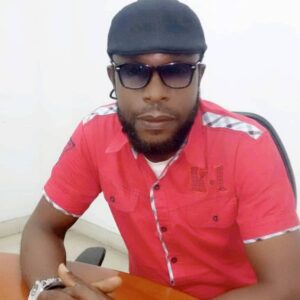
By OBIAJULU AGU
For decades, the National Orthopaedic Hospital, Igbobi, Lagos (NOHIL) has stood like a city within a city along the busy Ikorodu Road. Established in 1945, its reputation as a centre of excellence is so entrenched that Lagosians simply call the entire axis “Igbobi.”
As commercial motorcycles took over Lagos transportation, “Igbobi landlord” became street slang, a derisive label for riders or commuters whose reckless encounters with traffic often ended with an admission into NOHIL. In Lagos traffic culture, the insult flies as common as exhaust smoke.
I lived long enough in Lagos to know this. My first interaction with NOHIL, back in the early 1990s, was professional. As a young journalist standing in for the Health Correspondent of *National Concord*, I visited the hospital to verify rumours of a looming strike. I interviewed management, gathered facts, and returned to the newsroom. It was routine. It was straightforward. And for many years, it remained my only memory of NOHIL.
That changed in 2023. Suddenly, NOHIL became my second home.
Today, I remain a patient with the file number AMD 10039338, shuttling between the Spine Clinic and Physiotherapy unit, until paraplegia made the latter impossible, while awaiting corrective surgery for degenerative lumbar spine disease, a condition worsened by an event I cannot forget, even when the mind tries to forget the date.
It happened during the administration of Governor Babatunde Raji Fashola, SAN. At the time, the Lagos State Environmental and Special Offences Unit, popularly called Task Force, was under the Ministry of Environment and Water Resources, headed by Commissioner Tunji Bello.
One evening, after leaving the International Maritime Press Centre in Apapa, I stepped onto Wharf Road and met a wall of traffic stretching all the way to Eleganza Plaza. As someone accustomed to navigating Apapa’s notorious gridlock, I had long adopted the Surulere–Okada–Apapa routine. But this holdup was different.
I soon discovered the cause: a Task Force checkpoint deliberately positioned beside a puddle and an operational truck, creating an artificial bottleneck. On the opposite lane, facing oncoming traffic, sat the dreaded ‘Black Maria’.
The crowd that gathered quickly confirmed my suspicion, operatives were extorting commercial motorcyclists. As a journalist, it was instinctive: the news was happening before my eyes. I pulled out my phone and began recording.
I didn’t see the blow coming.
A hard plastic pipe slammed against my hand. My phone flew to the ground. A policeman picked it up and handed it to the team leader, Superintendent Ajayi. That was the beginning.
What followed was a coordinated assault—fists, rifle butts, plastic pipes, boots, and unrestrained rage.
They beat every part of me they could reach. My backpack became a target, cushioning some blows but sacrificing the laptop inside, which was destroyed.
For almost ten minutes, they pummelled me at the junction of Wharf and Commercial Road before dragging my bruised body into the stifling Black Maria.
Inside that dark, airless cage, I managed to secretly call Commissioner Tunji Bello—a former colleague from the Concord newsroom who reacted with indignation. His first words were telling: “Bayo… Bayo…” a tired acknowledgment of the Task Force’s notoriety under its Chairman, then-Superintendent Bayo Sulaiman.
When dusk fell, the Task Force violated the same traffic laws it claimed to enforce by driving against traffic out of Apapa. Along the way, they stopped at Apapa Police Division to offload some detainees, then made another obscure stop at Ijora before heading to their headquarters in Alausa.
At Alausa, I saw Chairman Sulaiman among officers in plain clothes. My earlier calls had clearly reached him. Without greeting, he asked,
“Who is the journalist?”
I stepped forward.
What followed was a long, unsolicited sermon on how journalists “should behave.” I listened at first, but the arrogance became suffocating. I reminded him I was a trained journalist who had covered the Police, NDLEA, and Defence beats. I told him plainly that what his men did to me was not law enforcement, it was sadism.
He smiled throughout. A smile that said everything.
When he finally ordered my release, I requested my phone. Ajayi claimed they needed to “duplicate the recordings.” I agreed, unaware of the deception. Later, I discovered they wiped every photo, video, and audio file on the device.
Before I left, both Ajayi (0803 427 7806) and Sulaiman (0803 318 3477) insisted we exchange numbers “for better relations.” I never called them again.
I limped home, too exhausted to retrieve my car from Surulere. I swallowed painkillers, slept in fits, and the next day retrieved my vehicle—thankfully untouched.
I never followed up with Bello. I simply absorbed the loss of my laptop, my files, my dignity, and as it turned out, my health.
Shortly after the incident, the real damage began to manifest.
Persistent back pain.
Endless medication.
Years of discomfort.
Then, an eventual diagnosis: degenerative lumbar spine disease with paraplegia.
The beating had damaged my spine. Badly.
By 2025, I had been placed on NOHIL’s waiting list for corrective surgery. It is now May 2026. My last appointment was scheduled for May 11, but I missed it due to logistics constraints. I now have a new date: July 6, 2026.
And so, as I wait painfully, hopefully, I reflect on how a simple act of citizen journalism, capturing extortion on video, turned me into what Lagos slang mockingly calls an “Igbobi landlord.”
Only that in my case, it is not a joke.
It is my reality.