


Joyce Mmereole Okoli
The Executive Director of Operations at Tantita Security Nigeria Limited, Capt. Warredi Enisuoh, has raised concerns over Nigeria’s continued dependence on foreign vessels, warning that the nation’s failure to develop indigenous ship ownership poses a serious threat to its national security and economic sovereignty.
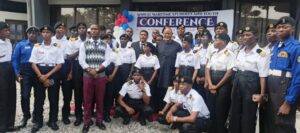
Speaking at the 10th Annual Maritime Students and Youth (AMSAY) Conference, organised by Platform Communications under the theme, “A Decade of AMSAY Conference: Eyes on the Horizon,” Warredi said Nigeria’s inability to own and operate a significant cargo fleet has left the country strategically vulnerable in an increasingly uncertain global environment.
“Countries that own and operate their cargo vessels enjoy significant strategic advantages. In times of conflict, many of these vessels can be converted into military assets within a very short time. Nigeria does not have that privilege because we do not own the ships that carry our cargo,” he said.
According to him, maritime nations that have deliberately invested in shipping capacity are better positioned to protect their economic interests, secure supply chains, and respond effectively to national emergencies.

Drawing comparisons with China, Warredi noted that the Asian powerhouse has built its maritime strength around a robust indigenous shipping industry, enabling it to control a substantial share of its cargo movement while simultaneously bolstering its national defence capabilities.
“China carries the bulk of its cargo through its own vessels. That is not just an economic strategy; it is a national security strategy. The ability to control the movement of your goods is a critical component of sovereignty,” he stated.
The maritime expert challenged Nigeria to clearly define its maritime ambitions and develop a coherent strategy that aligns shipping development with national security objectives.
“We must ask ourselves a fundamental question: What exactly is Nigeria’s maritime mission? Until we answer that question and commit to it, we will continue to lag behind other maritime nations,” he said.
Warredi stressed that Nigeria’s heavy reliance on foreign-owned vessels for the transportation of its imports and exports exposes the country to significant risks, including disruptions in global trade and limited control over strategic cargo movement.
“A nation that cannot transport its own cargo is exposed to vulnerabilities that go beyond economics. It becomes a security issue. We cannot continue to depend entirely on others to move our goods and expect to achieve true maritime independence,” he warned.
He called on policymakers, industry stakeholders and investors to prioritise the development of indigenous shipping capacity, maritime infrastructure and supportive policies that would encourage Nigerian participation in global shipping.
While acknowledging past shortcomings, Warredi urged the country to take decisive steps toward correcting the imbalance.
“Mistakes are human, but what matters is our willingness to recognise them and take corrective action. Nigeria still has the opportunity to build a strong maritime future, but the time to act is now,” he added.
He concluded that investing in ship ownership is no longer merely an economic consideration but a strategic imperative for national survival, competitiveness and security.
“Building indigenous shipping capacity is not optional. It is essential for our economic resilience, our security, and our standing in the global maritime community,” Warredi said.