

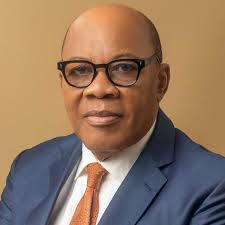
Joyce Mmereole Okoli
As Nigeria moves closer to disbursing the over $700 million Cabotage Vessel Financing Fund (CVFF), maritime, banking, insurance and legal experts have developed a comprehensive framework aimed at protecting lenders, ensuring responsible lending and guaranteeing the long-term success of the scheme.
The recommendations emerged at the maiden Olisa Agbakoba Legal (OAL) Maritime Policy Roundtable, held in Lagos, where industry leaders examined practical measures for reducing financial and operational risks associated with vessel financing while strengthening indigenous participation in Nigeria’s shipping industry.
Opening the forum, Managing Partner of Olisa Agbakoba Legal, Mrs. Yvonne Ezekiel, stressed that sustainable maritime financing would require strong collaboration among financial institutions, shipowners, regulators, insurers and legal practitioners.
She noted that the complexity of ship financing demands a coordinated approach capable of addressing both legal and commercial risks.
Delivering the keynote presentation, Senior Partner, Dr. Olisa Agbakoba (SAN) traced the evolution of the Cabotage Vessel Financing Fund, situating it within Nigeria’s long-standing efforts to build indigenous shipping capacity.
He reviewed major milestones in Nigeria’s maritime policy, including the establishment of the Nigerian National Shipping Line and the enactment of the Coastal and Inland Shipping (Cabotage) Act, 2003, which created the CVFF to support vessel acquisition by indigenous operators and expand Nigerian participation in coastal shipping.
Presenting a legal and financial roadmap for participating banks, Partner at Olisa Agbakoba Legal, Mr. Collins Okeke, outlined a comprehensive credit-risk framework designed to safeguard financial institutions while improving the quality of lending under the CVFF.
According to him, sustainable vessel financing must be anchored on rigorous credit assessment, corporate and regulatory due diligence, well-structured security arrangements and clearly defined loan recovery mechanisms.
“Financial institutions must carry out independent assessments of applicants’ financial strength, debt exposure, operational competence and projected cash flows rather than relying solely on information supplied by borrowers,” Okeke advised.
He also recommended thorough verification of beneficial ownership, regulatory compliance and the source of equity contributions before loan approvals are granted.
To further protect lenders, he advocated enforceable ship mortgages, assignment of vessel earnings and receivables, comprehensive marine insurance cover and clearly defined restructuring procedures for distressed loans.
On the operational side, Managing Director of NBC Maritime Ltd., Capt. Nicolas Bernard (AFNI), underscored the importance of professional ship management in preserving the value of financed vessels and ensuring successful loan repayment.
He observed that acquiring a vessel represents only the first phase of the investment, noting that long-term profitability depends largely on efficient management.
According to Bernard, professional ship management encompasses preventive maintenance, technical operations, regulatory compliance, crew management, procurement, financial oversight and digital performance monitoring.
He further recommended involving professional ship managers from the vessel acquisition stage to strengthen technical due diligence, improve compliance, reduce maintenance costs and minimise operational downtime.
Participants agreed that integrating professional ship management into the CVFF framework would significantly reduce operational risks, protect lenders’ investments and ensure financed vessels remain commercially viable throughout their lifespan.
During the interactive session, stakeholders reflected on lessons from previous ship-financing initiatives, particularly the unsuccessful Series 1 implementation of the CVFF.
Participants stressed that the mistakes of the past must not be repeated, insisting that the forthcoming Series 2 should be driven by stronger credit evaluation processes, specialised maritime-finance expertise, continuous project monitoring and enforceable security structures.
They also highlighted the need to examine cargo reservation policies adopted in other maritime nations, noting that guaranteed cargo availability remains critical to banks’ willingness to finance vessel acquisition.
Beyond the immediate rollout of the CVFF, the forum explored strategies for developing a sustainable long-term maritime finance ecosystem.
Among the proposals was the adoption of cargo-backed financing and long-term Contracts of Affreightment, which stakeholders said could provide predictable revenue streams for indigenous shipowners, improve loan repayment capacity and enhance access to commercial financing.
To institutionalise the initiative, participants agreed to expand the Maritime Policy Roundtable to include marine insurers, ship managers, surveyors, engineers and marine valuers, thereby creating a broader knowledge platform for sustainable vessel financing.
The forum also appointed Mr. Wale Mesioye of Fidelity Bank Plc as Coordinator to work with Olisa Agbakoba Legal in driving future engagements and building industry capacity around maritime finance.
Participating banks were equally encouraged to establish dedicated maritime-finance desks staffed by specialists capable of evaluating shipping investments and managing sector-specific risks.
The roundtable attracted representatives from Fidelity Bank Plc, Zenith Bank Plc, TAJBank, Lotus Bank, the Bank of Industry, SUNU Assurances Nigeria Plc, Capstone Insurance Brokers Limited, NBC Maritime Ltd. and Seamate Group, among other organisations.
Concluding the event, Dr. Agbakoba announced that subsequent editions of the Maritime Policy Roundtable would feature broader participation from shipowners, financial institutions and officials of the Federal Ministry of Marine and Blue Economy as stakeholders continue to refine a sustainable financing framework capable of unlocking Nigeria’s indigenous shipping potential.