

Joyce Mmereole Okoli
Nigeria’s Minister of Marine and Blue Economy and Chairman of the Fisheries Committee for the West Central Gulf of Guinea (FCWC), Dr. Adegboyega Oyetola, has urged West and Central African countries to strengthen regional collaboration and scale up investments in the fisheries sector to unlock the region’s vast blue economy potential.
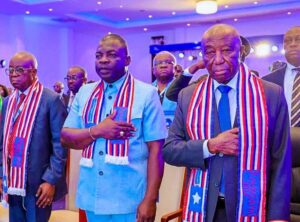
Dr. Oyetola made the call on Monday in Monrovia, Liberia, while speaking at the National Fisheries Investment Conference held from 30–31 March 2026. The conference was declared open by Liberia’s President, Joseph Nyuma Boakai, and drew participation from fisheries and aquaculture Ministers across the subregion.
Describing the summit as timely, the Minister said it offered a strategic platform to deepen cooperation and harness emerging opportunities in fisheries and the broader blue economy. He stressed that fisheries remain central to food security, employment creation and economic growth within the region.
“Millions across West and Central Africa depend on fisheries and aquaculture for their livelihoods, and fish remains one of the most affordable sources of protein,” he said. “Yet, despite our abundant marine and inland water resources, the sector continues to face significant challenges.”
He identified declining fish stocks, weak infrastructure, inadequate access to finance and slow adoption of modern technology as key barriers limiting sector growth. Addressing these issues, he noted, requires sustained investment, targeted reforms and robust regional collaboration.
Dr. Oyetola reaffirmed that the Federal Government, under President Bola Ahmed Tinubu, is repositioning fisheries and aquaculture as major pillars of Nigeria’s blue economy agenda. He highlighted policies aimed at boosting local production, curbing imports and tightening regulatory oversight—initiatives that he said are already yielding positive outcomes, including Nigeria’s continued access to international markets for shrimp exports.
Beyond fisheries, the Minister outlined ongoing reforms aimed at strengthening Nigeria’s maritime domain. These include efforts to curb marine pollution, modernise port infrastructure and enhance maritime security. He noted that Nigeria’s current record of zero piracy incidents has significantly bolstered investor confidence in the Gulf of Guinea.
On driving investment, Dr. Oyetola called for increased funding across the entire fisheries value chain—from aquaculture and processing to cold-chain logistics and export development. With the right policy environment, he said, the sector has the capacity to generate substantial jobs, particularly for young people, and boost economic growth.
He further underscored the need for deeper regional cooperation, noting that fish stocks traverse national borders. “No single country can tackle illegal, unreported and unregulated fishing alone,” he warned, emphasising the importance of collective action through regional bodies such as the FCWC.
As Chairman of the FCWC Ministerial Committee, Dr. Oyetola reaffirmed the organisation’s commitment to enhancing joint efforts in fisheries governance. He referenced ongoing initiatives such as the development of a regional record of fishing vessels, coordinated patrols and strengthened information-sharing systems aimed at improving enforcement and sustainability.
He added that the FCWC is also working to harmonise fisheries policies among member states and expand intra-regional trade, with a view to strengthening value chains and attracting increased investment.