

Joyce Mmereole Okoli
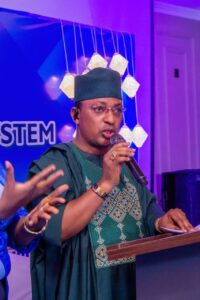
Transportation expert and Chairman of Widescope Logistics International, Dr. Segun Musa, has said Nigeria cannot achieve meaningful economic growth without prioritising rail development, multimodal transport integration and stronger private sector participation.
Speaking ahead of a transport sector roundtable, Musa, who also serves as Chief Consultant at Global Transport Policy, said the organisation is working to promote a more coordinated national transport system capable of reducing logistics costs and improving trade efficiency.
According to him, Nigeria’s current reliance on single-mode transportation has continued to drive up landing costs, raise commodity prices and slow economic expansion.
“We want to change the narrative in Nigeria’s transport sector by ensuring a more holistic and symbiotic interaction among road, rail, air and inland waterways transportation,” he said.
Musa explained that integrating transport modes remains the most effective way to boost supply chain efficiency and lower the cost of doing business, adding that the country must urgently invest in infrastructure, human capacity and digital technologies.
“For instance, cargo can move by rail to terminals, then be distributed by trucks or connected to airports and seaports. That is how an effective multimodal transport system works,” he said.
He emphasized that Nigeria needs expanded rail lines, improved roads, functional inland waterways and modern logistics hubs to support seamless cargo movement across the country.
Musa also urged government to deepen collaboration with private investors to close the country’s infrastructure gap, noting that models such as Public-Private Partnerships (PPP), Build-Operate-Transfer (BOT) arrangements and foreign direct investment would be crucial.
“Transportation infrastructure is capital intensive. Government cannot do it alone. There must be collaboration between the state, private investors and foreign partners to drive development,” he said.
On rural development, Musa said local communities must be sensitised to the economic benefits of transport infrastructure to encourage ownership, protection and long-term sustainability.
He further highlighted the importance of digital transformation, stressing that Nigeria must invest in young people and technology-driven innovations to align with global transport standards.
Musa identified the rail sector as the single most critical investment Nigeria needs to prioritise for maximum economic impact.
“Rail should receive greater attention because it carries more volume at lower cost and can significantly support economic growth,” he added.
He maintained that a modern, multimodal transport system would unlock new opportunities across trade, manufacturing and industrialisation, positioning Nigeria for rapid economic development.